
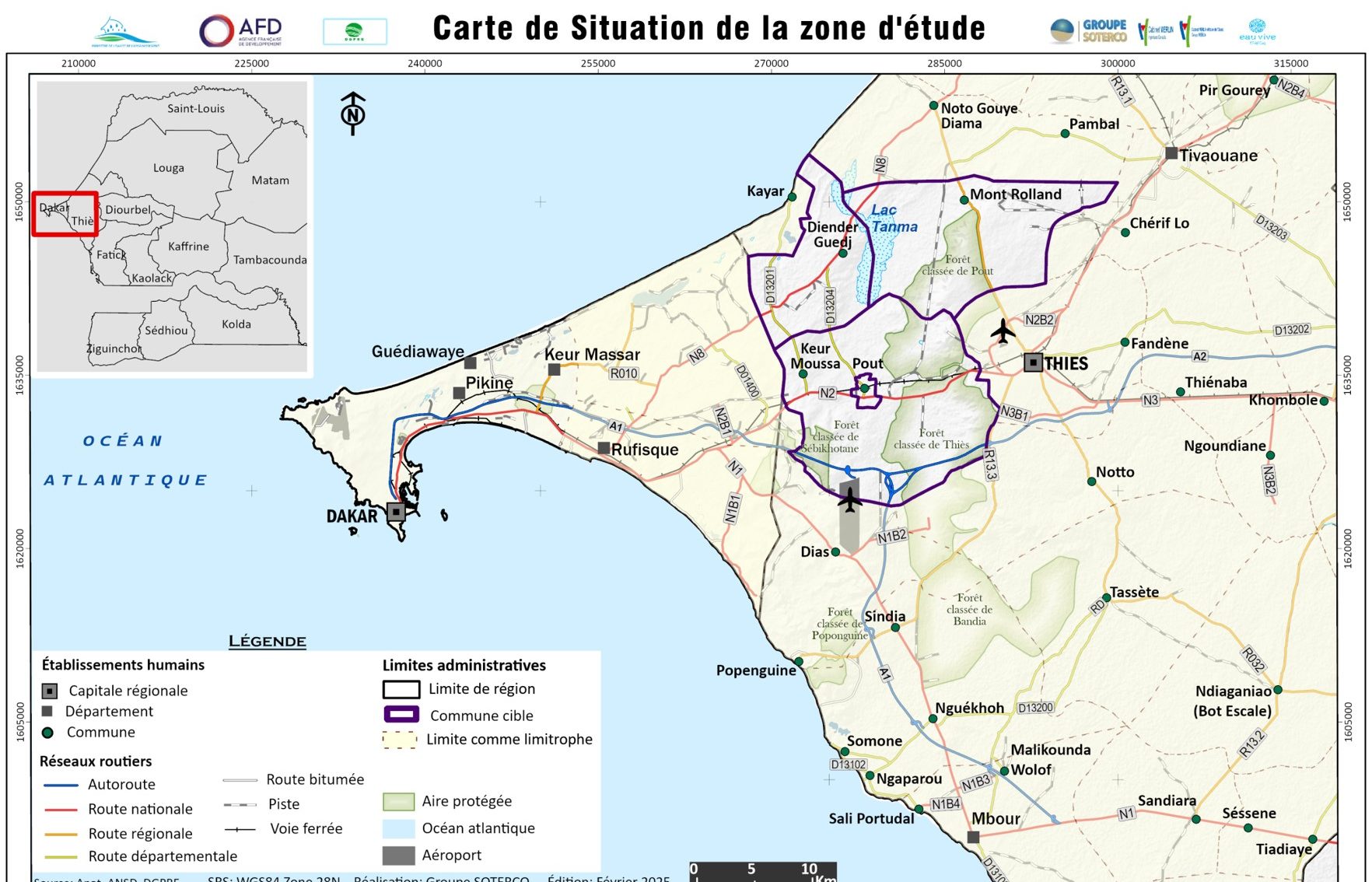
The project aims to strengthen water security in the Pout area through the sustainable preservation of resources, in a context marked by climate change and through the use of nature-based solutions. It pursues two specific objectives: establishing integrated management that considers all water uses, and optimizing withdrawals to ensure a lasting balance between needs and availability.
It is built on an innovative approach, both in its design and its governance. The use of an aquifer contract as a coordinated management tool, as well as an artificial recharge basin, represents new mechanisms that the Senegalese government wishes to draw on to reinforce water-resource protection measures. The project also adopts a co-construction approach, involving all users in defining and implementing governance mechanisms, with the aim of fostering collective ownership of preservation objectives.
This multi-stakeholder dimension, while value-creating, introduces complexity that requires extensive coordination, facilitation, and stakeholder engagement to ensure the achievement of expected results. The project also includes a major communication component to promote its innovative approach and position it as a replicable model for managing other watersheds in the country. Finally, it is structured around four components: improving water-resource governance, improving the water balance, promoting efficient irrigation and combating soil erosion, and managing the project along with technical assistance to the project owner.