
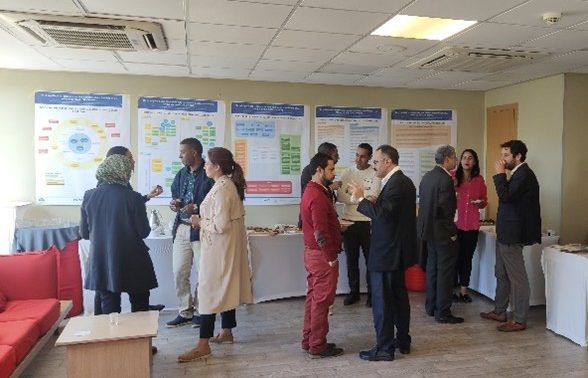
The study is part of Activity 4, “WP4: Integrated food, land, water, and energy systems for climate-resilient landscapes,” of the project “From Fragility to Resilience in Central and Western Asia and North Africa (F2R-CWANA)” led by the International Water Management Institute (IWMI) in collaboration with the CGIAR International Group.
The F2R-CWANA project operates in five countries: Morocco, Sudan, Lebanon, Uzbekistan, and Egypt. In Morocco, the study is conducted in the Bouregreg basin within the framework of a partnership between IWMI and the Bouregreg and Chaouia Basin Agency (ABH-BC). The study was commissioned to the consulting firm RESING.
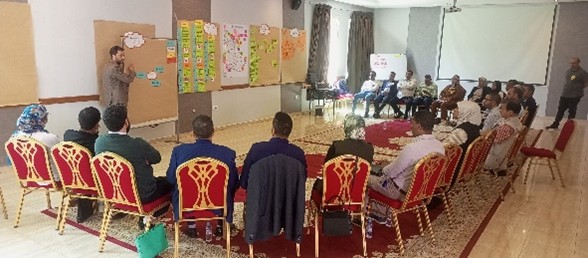
The choice of the Bouregreg watershed in Morocco by the F2R-CWANA project is justified by the fact that it is a strategic basin facing multiple vulnerabilities:
- Significant reduction in rainfall and widespread drought. This water deficit leads to the overexploitation of groundwater. According to RCP scenarios (2.6, 4.5, and 8.5), the study area is expected to become more arid in the future, which will have direct and negative effects on crops, especially cereal yields, as well as on water resources.
- Soil erosion risks: This basin is highly susceptible to water erosion, leading to the degradation of its vegetation cover and lands, as well as sedimentation of the major dam in the watershed (Sidi Mohamed Ben Abdellah Dam).
- Water pollution challenges in the central and downstream parts of the watershed, coupled with limited treatment capacities.
The objectives of the mission are:
- To assess the state of food, land, water, and energy systems for climate-resilient landscapes.
- To propose or consider governance scenarios based on the food, land, water, and energy nexus, integrating local communities at the watershed level.