
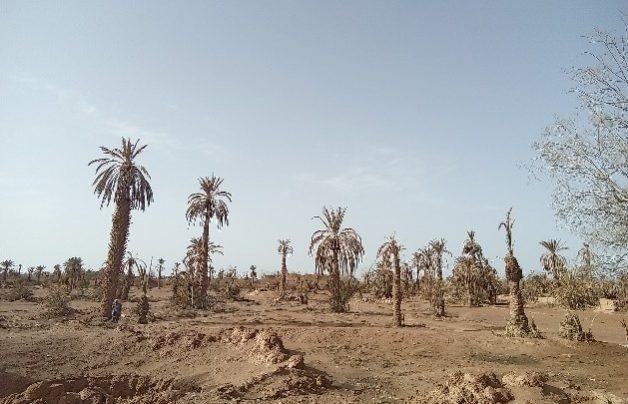
The study was part of Component 2 of the OASIL project, led by FAO and its partners, aiming to revitalize the oasis agroecosystems in the Drâa-Tafilalet region. Its objective was to assess the feasibility of rehabilitating and renewing traditional palm groves by promoting local date palm varieties valued by farmers, across two pilot sites of the project:
- The first site includes the territorial communes of Aarab Sebbah Rheris, Jorf, Fezna, and Mellaab in Errachidia Province.
- The second site covers the communes of Ktaoua, Tagounite, and Mhamid El Ghizlane in Zagora Province.
Located respectively in the Moyen Rhéris and Moyen Drâa basins, these two sites offered demonstration potential and could serve as models for the regional rehabilitation of traditional palm groves.
Following the participatory approach emphasized by the OASIL project, the study pursued several specific objectives: to establish a thorough diagnosis identifying strengths, constraints, and vulnerability factors; to formulate strategic and operational recommendations to address the identified constraints; and to develop a General Palm Grove Rehabilitation Plan (SGRP), accompanied by an action plan focused on integrated and sustainable management of resources (soil, water, local varieties).
The process was carried out over three successive missions: a preliminary mission to define and validate the methodology; a first mission dedicated to diagnosis and assessment; and a second mission focused on developing, in consultation with all partners, the general plan and rehabilitation action plan.
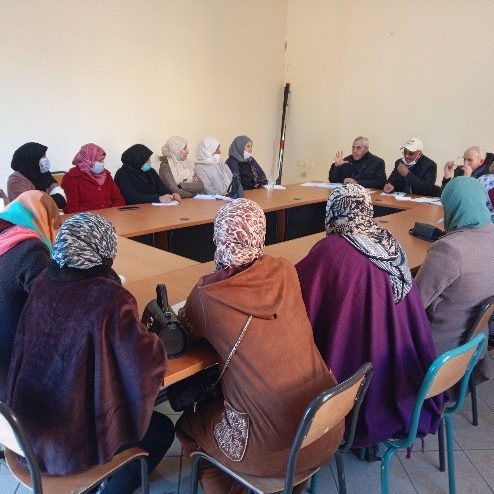
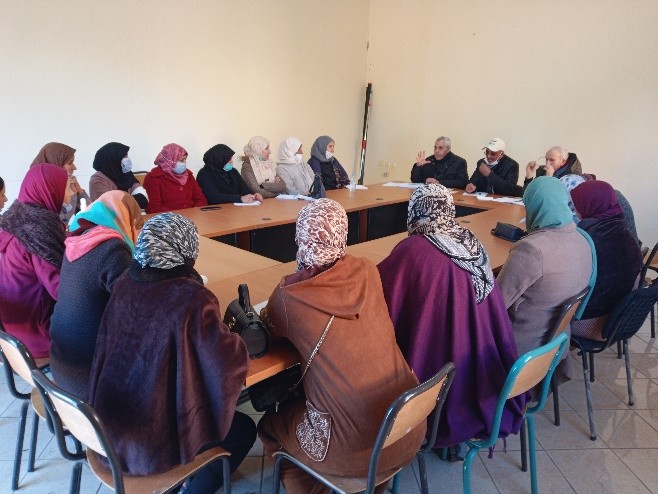
To carry out this work, the RESING team employed a range of tools and activities, including document collection and analysis, interviews with producers, professional organizations, and institutions, field investigations involving visits, surveys, and direct observations, as well as awareness-raising and training sessions. The study also included workshops for presentation, consultation, and validation, ensuring that local and institutional stakeholders fully appropriated the results.